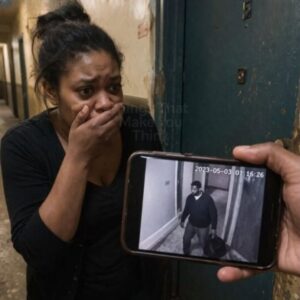
The sirens weren’t the scariest part; the real terror was the way my sister’s voice sliced through the paper-thin walls, painting me as a kidnapper while my nephew sobbed in the next room. The cops believed her—everyone always did—until one cracked old phone and one terrified little boy forced the truth into the open. That night, trust shattered, loyalties flipped, and the story we’d told ourselves about family finally bled out on the liv…
Logan’s shaking fingers pressed play, and the room changed temperature. Her voice spilled out—cold, practiced, bragging about leaving him with me like luggage while she disappeared with stolen cash and a man he’d never met. The officers’ faces hardened; their questions shifted. The cuffs that had hovered inches from my wrists closed around hers, and for the first time, she couldn’t talk her way out of it. After that night, silence had its own sound: the hum of the fridge, the scratch of Logan’s pencil, the slow settling of a house learning it was finally safe. Court dates blurred together, each one chiseling away at the woman who’d birthed him but never really chosen him. When the judge granted me custody, it felt unreal, like I’d stolen something sacred and fragile. Months later, over pancakes, he looked up, syrup on his chin, and called me “Mom.” No siren had ever been that loud—or that hea…
Healing didn’t arrive like a sunrise; it seeped in through the cracks. Nightmares still yanked Logan awake, his small hands clutching my shirt, asking if they’d take him back. I learned to sleep in fragments, to keep the hallway light on, to answer the same question a hundred different ways: “You’re safe. I’m not going anywhere.” Some days he tested that, pushing, screaming, calling me by her name like it was poison he had to spit out. I took it, every time, because I knew who he was really angry at, and it wasn’t me—it was the ghost of a mother who’d chosen chaos over him. The last time we saw her was in a courthouse hallway, her wrists bare but her eyes caged. She tried to smile, to twist the air between us the way she always had. Logan stepped behind my leg, then peeked out, his voice barely above a whisper: “I don’t have to go with her, right?” The social worker shook her head. Papers were signed. Rights were terminated. Years of manipulation ended with a few strokes of a pen and a door clicking shut behind her. On the drive home, Logan watched the city smear into color and said, almost casually, “We can just be us now.” The sirens were long gone, but in that quiet car, his words were louder than any accusation, any lie—proof that sometimes family isn’t who shares your blood, but who stays when the world walks away.
Months later, the house no longer felt like a borrowed life. Logan’s drawings crept across the fridge, all crooked superheroes and lopsided houses with two figures out front—him and me, always holding hands. He still flinched at sudden knocks, still watched exits in crowded rooms, but the questions changed from “Will they take me?” to “Can we paint my room blue?” and “Do we have to visit her someday?” I told him the truth: no judge, no paper, no one could make him go where he didn’t feel safe again. The sirens became something distant, a sound on TV instead of a memory in our bones. On the anniversary of that night, we made pancakes for dinner, his choice. He poured too much syrup, grinning, and said, “This is our weird little family, right?” I looked at the boy who used to shake when the doorbell rang and saw a kid finally claiming his own story. “Yeah,” I said, my throat tight but steady. “Ours. No one else’s.”