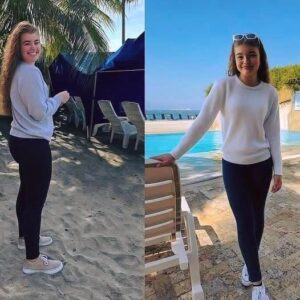
She thought she was saving her body. Instead, she was slowly starving it.
At just twenty-seven years old, the young woman had become deeply devoted to an extreme version of “clean eating” she discovered online — a rigid lifestyle promising purity, healing, energy, and total control over health. Influencers praised it constantly. Wellness accounts framed
At just twenty-seven years old, the young woman had become deeply devoted to an extreme version of “clean eating” she discovered online — a rigid lifestyle promising purity, healing, energy, and total control over health. Influencers praised it constantly. Wellness accounts framed it as enlightenment. Foods were labeled “toxic” or “safe,” entire food groups eliminated, and ordinary eating slowly transformed into a moral test she believed she had to pass perfectly.
At first, people around her thought she simply seemed disciplined.
She posted carefully filtered meals, wellness routines, glowing captions about “healing from the inside out.” Social media rewarded the transformation immediately. Compliments poured in. Followers admired her commitment. Online communities encouraged her every restriction, interpreting weight loss and exhaustion as evidence that her body was “detoxing.”
Meanwhile, her actual body was beginning to fail quietly.
Friends later remembered how intensely she believed in the protocols she followed. She spoke passionately about cleansing her system, removing hidden toxins, and trusting “natural healing” over conventional advice. If she felt dizzy, weak, or sick, online wellness circles reassured her that discomfort was normal — proof the process was working. Fatigue became “release.” Pain became “purification.” Fear became something to overcome rather than listen to.
That psychological trap is part of what makes extreme wellness culture so dangerous.
The deeper someone falls into it, the harder it becomes to recognize warning signs because every symptom gets reinterpreted as progress. Hunger feels virtuous. Restriction feels disciplined. Concern from loved ones feels like negativity or misunderstanding. The body’s distress signals stop sounding like alarms and start sounding like obstacles blocking transformation.
By the final months of her life, people close to her reportedly noticed frightening physical changes.
Her energy disappeared. Her appearance grew increasingly fragile. Concentration became difficult. Yet online, the illusion remained intact. Filtered photos and inspirational posts continued creating the image of someone thriving, even while her organs struggled beneath the surface.
That contradiction is painfully common in cases linked to extreme dietary obsession
Social media compresses health into appearances, aesthetics, and narratives simple enough to fit into motivational content. But real health is far more complex and far less photogenic. Bodies require balance, nourishment, flexibility, and medical understanding — not purity contests disguised as wellness journeys.
Experts often connect stories like hers to orthorexia, an unhealthy obsession with “perfect” eating that can become psychologically consuming. Unlike some eating disorders driven mainly by weight or appearance, orthorexia frequently hides behind socially praised behaviors. Discipline gets applauded. Restriction gets admired. People suffering may look “healthy” to outsiders long after their relationship with food has become emotionally destructive.
And the internet amplifies the danger dramatically.
Influencers without medical training can gain enormous authority simply by appearing confident, attractive, or persuasive. Algorithms reward certainty over nuance, emotional storytelling over scientific caution. Someone searching innocently for healthier habits can gradually fall into communities promoting increasingly extreme ideas about food, detoxing, fasting, supplements, or “natural healing” without realizing how far from evidence-based guidance they have drifted.
According to those close to her, the young woman trusted those voices deeply.
By the time she finally entered a hospital, the damage to her body had reportedly progressed beyond what doctors could reverse. Her organs had endured prolonged strain from malnutrition and imbalance while symptoms that should have triggered urgent medical attention were continually reframed as temporary stages of healing.
After her death, family members reportedly searched through browser histories, saved videos, wellness forums, and message threads trying to understand how things had spiraled so far. What they found shocked them: strangers with no medical qualifications speaking with total authority about diets, detoxes, and extreme protocols while vulnerable people listened desperately for answers.
Now, health experts increasingly point to cases like hers as warnings about the seductive illusion modern wellness culture can create.
Because the danger is not simply vanity.
It is the promise of certainty.
The idea that perfect control over food can guarantee safety, purity, or freedom from illness in an unpredictable world. That belief becomes emotionally powerful, especially for people searching for stability, healing, or meaning. But when wellness turns into fear, rigidity, and isolation from reality, the pursuit of health can quietly become self-destruction disguised as discipline
And perhaps that is the most heartbreaking part of her story.
She did not set out to harm herself.
She wanted to feel better. Stronger. Healthier. More alive.
Instead, she became trapped inside a system that treated suffering as proof of success until her body could no longer survive it.
Now her story remains not as a morality tale about appearance or trends, but as a painful reminder that real health cannot be built on fear, extremes, or internet certainty alone — and that medical guidance should come from people trained to protect life, not merely attract attention online.
Post navigation
Previous